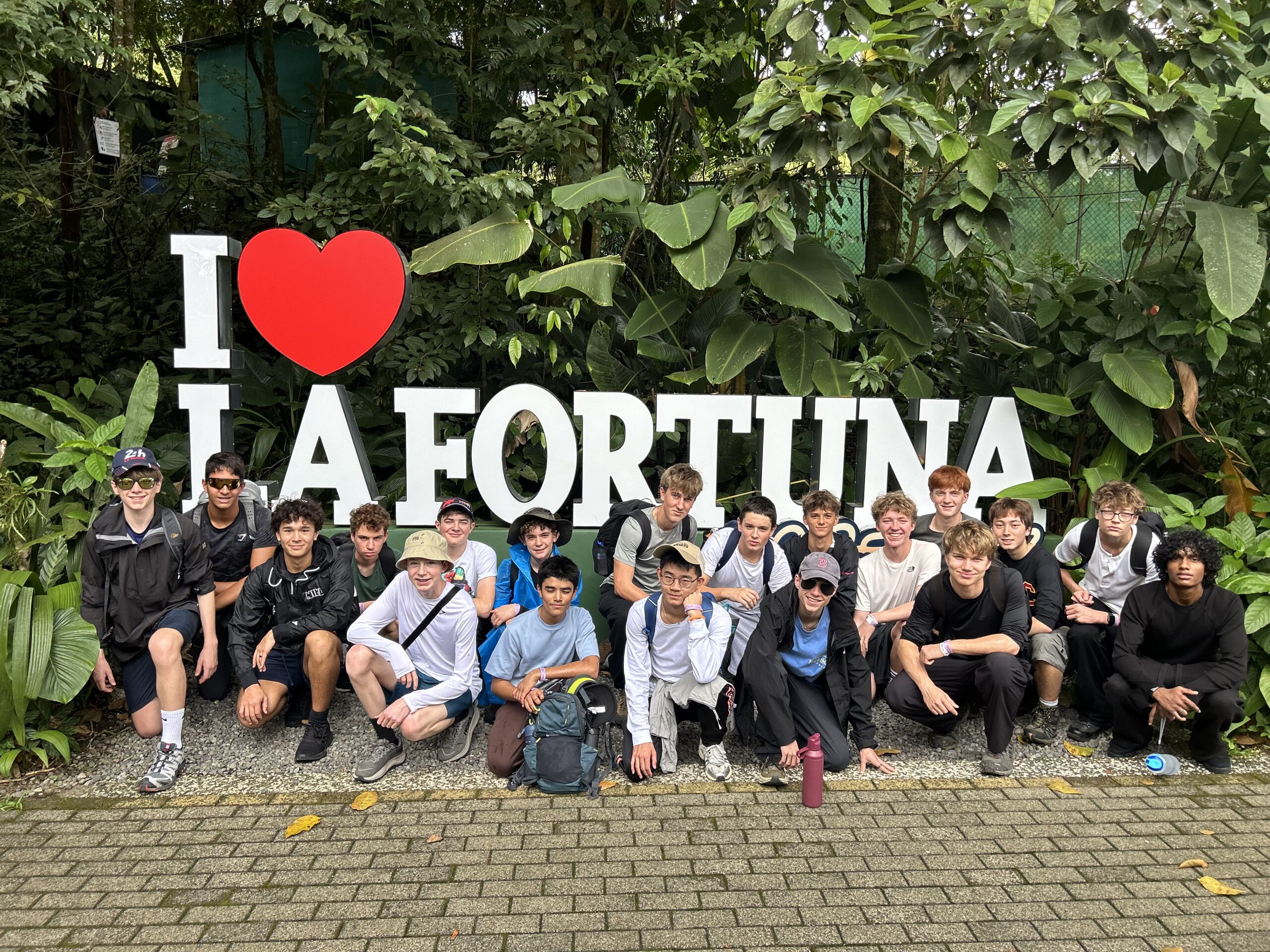

Fifth and Sixth Form geographers enjoyed an unforgettable trip to Costa Rica, exploring the country’s diverse landscapes, rich wildlife and vibrant communities while investigating the geographical processes and environmental challenges that shape this remarkable corner of Central America.
From the moment the group arrived, Costa Rica’s extraordinary biodiversity was on full display. A boat excursion through the waterways of Tortuguero National Park offered close encounters with spide and howler monkeys swinging through the forest canopy, caimans basking on riverbanks, colourful herons and and sloths hanging from branches above the hotel swimming pool! One evening provided a truly unforgettable highlight as Hamptonians watched green turtles emerge from the Caribbean Sea to lay their eggs on the beach before returning to the ocean.
The group also explored Costa Rica’s dramatic volcanic landscapes. A hike around Arenal Volcano revealed the magnitude of tectonic forces at play to create five active volcanoes in the country, while a visit to the spectacular La Fortuna Waterfall highlighted the hydrological forces that continue to shape the region. Elsewhere, they encountered the geothermal activity of Rincón de la Vieja Volcano at Las Hornillas, where bubbling mud pools and steaming vents provided a perfect spot to relax.
Wildlife remained a constant feature of the trip. Walks through the hanging bridges of Mistico Park and the trails of Santa Elena Cloud Forest offered breathtaking views of rainforest canopies teeming with life, while a visit to Proyecto Asis gave pupils the opportunity to observe one of the country’s most iconic animals during a dedicated sloth tour. Pupils were also given insight into the best forms of wildlife conservation to protect some of Costa Rica’s most endangered animals, like the jaguar and puma.
Alongside its natural wonders, the trip also provided insights into Costa Rican culture and rural life. In Sarapiquí, pupils learned about the history and production of chocolate (which included sampling Costa Rica’s finest cacao!), while a visit to Vida Campesina introduced them to traditional farming practices, local agriculture and the close connections between communities and the land on which they depend. Pupils were also able to test out their culinary skills as they were taught how to make traditional tortillas for everyone to enjoy as part of their evening meal. For those seeking a little more adventure, a series of ziplines, covering almost two miles, through the Monteverde Cloud Forest offered a thrilling perspective on the rainforest below.
Combining adventure, biodiversity and cultural discovery, the trip gave pupils an invaluable opportunity to deepen their geographical understanding while experiencing first-hand the landscapes, ecosystems and communities that make Costa Rica a global leader in conservation and sustainable development.